
Maintaining a steam locomotive is a demanding but rewarding task. These magnificent machines, with their intricate moving parts and high-pressure systems, require vigilant steam locomotive maintenance. However, even with the best care, various steam engine problems can arise due to the intense heat and mechanical stress they endure.
Catching wear and tear early is crucial for safety and preventing more extensive, costly repairs. Here is a guide to the key areas to keep an eye on and the common issues to watch for during steam locomotive maintenance.
The Motion and Running Gear
The motion, which includes the rods, valve gear, and pistons, is where you’ll find much of the locomotive’s work being done. Listen for any unusual noises while the locomotive is in motion—knocks, clunks, or groans can indicate a problem.
Bearings and Journals
Listening for any unusual noises, clunking, or grinding. Visually, metal shavings or larger metal debris can indicate an issue as well. Part of the visual inspection is also checking for clearances of the wheels or checking for excess lateral movement of the axle.
Piston and Valve Rods
Listening to the engine’s performance can tell you much about the condition of these items. Chattering and squeaking can indicate problems within the valve and piston cylinders, as well as excessive water consumption by the engine, which can indicate a lack of proper seal against the piston wall.
Running Gear Repair
These components are where the power of the engine is transferred to the wheels. You are listening for excessive knocking, clunking, or possibly even louder noises if there is a failure. Visually check for play, possible signs of lack of lubrication, and cracking.
The Boiler and Firebox
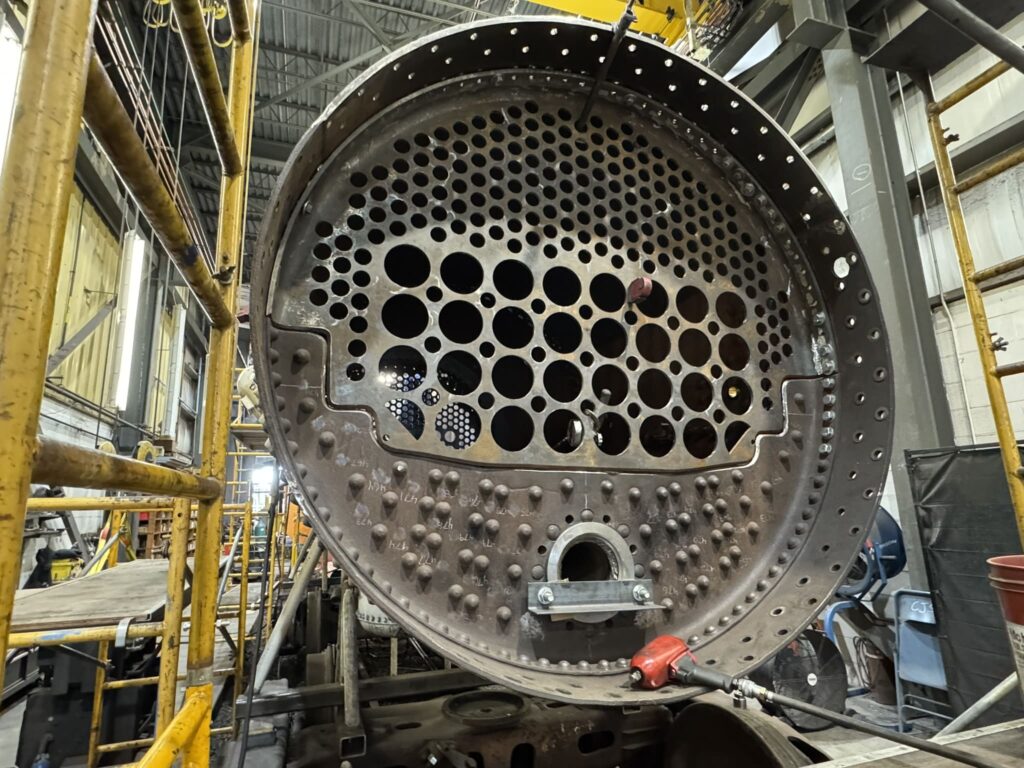
The boiler is the heart of the steam locomotive, and its condition is paramount for safety. Issues here can be catastrophic if not addressed promptly.
To read more about different types of boiler repairs, check out our blog.
Staybolts
Staybolts are often produced with a telltale, which means that in the event of cracks or breaks, it will drip a small amount of water into the firebox; sometimes this can be heard and/or seen.
Flues and Tubes
The flues provide heat transportation to the front parts of the boiler and also allow exhaust from the firebox to reach the smokebox. At times, these can crack and allow water from the boiler to flow back into the firebox and/or the smokebox. Tubes can also be cleaned or sanded to ensure minimal soot buildup is present; however, in coal-burning engines, it is typically not needed.
Firebox Sheets
Firebox sheets are checked for star or radial cracking advancing away from the location of the staybolt. Also, check for other defects like bulges or deformities.

The Wheels and Axles
The wheels and axles are responsible for carrying the locomotive’s weight and transmitting power to the rails. Regular inspection prevents derailments and ensures smooth operation.
Tires
While they don’t look like regular tires, steam locomotives do have tires. They’re just made of steel, and, much like your car tires, have a minimum thickness AND have a wear pattern.
Wheel Flanges
Wheel flanges are part of the tire. There are two important areas to check on: the flange thickness and profile. The flange must be a certain shape and thickness before it is condemned for replacement.
Axle Journals
Axle journals are the axle portion of the “axle bearing.” Steam engines that use driving boxes with axle journals are checked for pitting, abnormal wear, lubrication, and discoloration that could be related to overheating. Temperatures of the journals are also checked regularly by the engine crew by checking the adjacent hub (wheel center).
General Inspection Tips
Beyond the major components, a comprehensive inspection can reveal numerous issues that could cause major problems.
Leaks
Walk around the entire locomotive and look for any steam or water leaks. Leaks indicate failed gaskets, packing, or cracked components. They represent a loss of power and can hide more serious underlying issues.
Loose Fasteners
Visually check that all nuts, bolts, and studs are present and tight. Vibration can cause fasteners to loosen over time, leading to component failure.
Lubrication
Make sure that all lubrication points, such as grease fittings and oilers, are filled and functioning properly. A lack of lubrication is the primary cause of premature wear in any machine.
Preserving Your Locomotive with Strasburg Mechanical
By performing these checks regularly and proactively, you can ensure the longevity and safe operation of these historical giants. Good steam locomotive maintenance is the key to preserving a piece of living history for generations to come.
Ready to take your maintenance program to the next level? Our expert team is here to help you navigate your steam engine problems and find a solution. Contact us today for a comprehensive boiler inspection or a consultation to keep your locomotive on the tracks.