
Your boiler is one of the most important, if not the most important, parts of your steam engine. It’s the powerhouse that generates the steam to move the locomotive forward.
This part operates under immense pressure and heat, and demands care during both routine maintenance and repairs. Making sure it’s working properly is important not only for historical preservation but also for the safety of everyone around a steam locomotive.
We’ll explain further why steam boiler maintenance and repairs matter and explain the common repairs we see in the Mechanical Shop.
Why Boiler Repairs Matter
We mentioned that steam boiler maintenance and repairs are essential, but why do they matter?
Boiler repairs aren’t just about fixing a problem; they are about preventing disasters and preserving pieces of history.
Safety
Neglected boilers can develop leaks, cracks, or malfunctioning parts that pose serious safety risks. Routine maintenance includes thorough inspections of safety controls, pressure gauge calibration, and regular washing. These measures help prevent potential accidents.
The Federal Railroad Administration requires inspections of varying degrees every 31 service days, 92 service days, every calendar year, and every fifteen years or 1472 service days, whichever comes first.
The 1472 service day inspection entails a meticulous examination of every rivet, plate, and seam of the boiler shell as well as a painstaking ultrasonic thickness survey of all the boiler’s important components. The purpose of the inspection is to ensure public safety by verifying that the locomotive boiler remains sound and capable of containing the amount of steam pressure it generates.
Efficiency
To get the most out of your boiler, regular maintenance is essential. Over time, internal buildup of dirt, sediment, and mineral deposits can significantly hinder its performance. Regular washing and removal of scale deposits keeps your boiler running optimally and consume less energy.
Extend Lifespan
Just like any other mechanical system, boilers don’t have an infinite lifespan. But with proper maintenance, you can extend their longevity. Regular inspections catch minor issues before they become major problems. This approach can help you avoid premature boiler failure and possibly delay expensive replacements.
Regulation Compliance
Regular boiler maintenance is essential for compliance with safety regulations. By adhering to these regulations, you not only ensure the safety of your engine but also avoid potential penalties or legal issues.
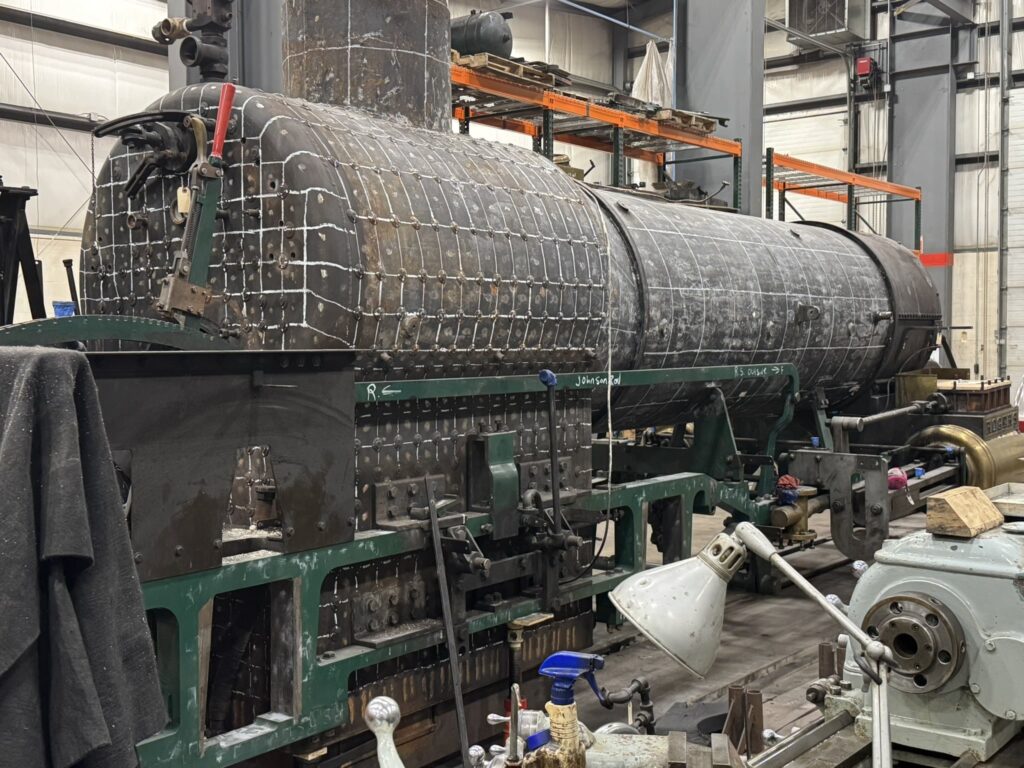
Common Types of Steam Locomotive Boiler Problems and Solutions
Strasburg Rail Road’s Mechanical Shop was the first steam locomotive repair shop in the country to receive ASME “S” Stamp and NBIC “R” Stamp certifications for boiler repair. This means we’re certified by ASME and NBIC to produce and repair boiler components per nationally and internationally accepted construction and repair standards.
When it comes to boilers, we’re able to troubleshoot most problems. Typically, we see repairs in four key areas: the firebox, the shell and plates, the tubes, and the fittings and mountings.
Firebox
On steam locomotives, the firebox is the enclosed space where fuel, whether it’s coal, oil, or wood, is burned to heat the water in the boiler. The firebox acts like the furnace of the locomotive. A firebox rebuild can be extensive, but it’s essential for the health of a locomotive.
1. Staybolt Replacement
Staybolts support the firebox sheets against the immense pressure. They can break due to stress, corrosion, or overheating. Detecting broken staybolts often involves looking for leaks from telltale holes or by hammer testing. Replacement involves removing the broken bolt and installing a new one, ensuring a tight, leak-proof fit, often with seal welding around the heads. Flexible staybolt sleeves also require inspection for corrosion, cracks, and leaks.
2. Firebox Rebuilding
In cases of extensive damage from overheating, corrosion, or cracking, a complete or partial firebox rebuild may be necessary. This involves removing and replacing large sections of the inner firebox sheets.
3. Firebox Grate Repairs
The grates that support the fire in the firebox can burn out, warp, or break. Repairs involve welding broken sections or replacing damaged grate bars.
Shell and Plates
The shell is the outside of the boiler and is made up of steel plates. When the shells get weak, they can fail with potentially catastrophic results. Here are the more common repairs for boiler shells
1. Patching
Sections of the boiler shell or firebox sheets can become thin due to corrosion, pitting, or cracking. These are often repaired by welding new metal patches to the shell or surrounding plates. The patches must be carefully shaped and welded to make sure there’s a strong, leak-proof seal.
2. Seam Repairs
Riveted seams can leak, corrode, or show signs of plate separation. Different repairs involve re-caulking the seams by hammering the plate edges, replacing rivets, or, in extreme cases, replacing entire sections of the shell courses. Longitudinal lap seams, known to be prone to cracking, require careful inspection and may need X-ray exams to see how they’re holding up.
3. Flange Repairs
The flanged sections of the firebox sheets can develop cracks or thin due to corrosion and overheating, especially around the tube sheet. Repairs involve welding cracks, building up thin areas with weld material, or replacing the flanged section.
Tubes
The tubes, or flues, carry the heat and smoke from the firebox through the boiler to the smoke box to be exhausted. Keeping them in working order helps prevent accidents and makes sure everyone is safe.
1. Tube Replacement
Boiler tubes and superheater flues can become thin, corroded, or develop leaks. To replace them, you need to remove the old tubes and install new ones, making sure they’re properly expanded and sealed in the tube sheets.
2. Tube Cleaning
Soot buildup inside the tubes reduces heat transfer efficiency. To keep this from happening, regular cleaning, sometimes involving “sanding the flues,” is essential maintenance.
Fittings and Mountings
When inspecting your boiler, an area that shouldn’t be overlooked is the fittings and mountings. These might be small parts, but they play a major role in keeping your boiler properly operating.
1. Repair or Replacement of Valves and Gauges
Regularly check your boiler’s valves, gauges, and the sight glass for accurate water level readings, especially with steam boilers, where proper water levels are critical for safety. Scale build-up can obstruct the sight glass, leading to inaccurate readings that could expose the crown sheet or cause water to carry over into cylinders. Promptly repair or replace any obstructed or leaking fittings like steam gauges, water level gauges, and safety valves to ensure safe operation.
If you’re looking for new safety valves for your boiler rebuild, our Shop has the expertise to manufacture custom-made locomotive components. And if you have a hard-to-find part, we also service custom reproductions.
2. Repairing Threaded Connections
Threaded fittings can leak or have damaged threads, requiring re-tapping or replacement. Having components come apart due to malfunctioning connections can be a safety hazard.
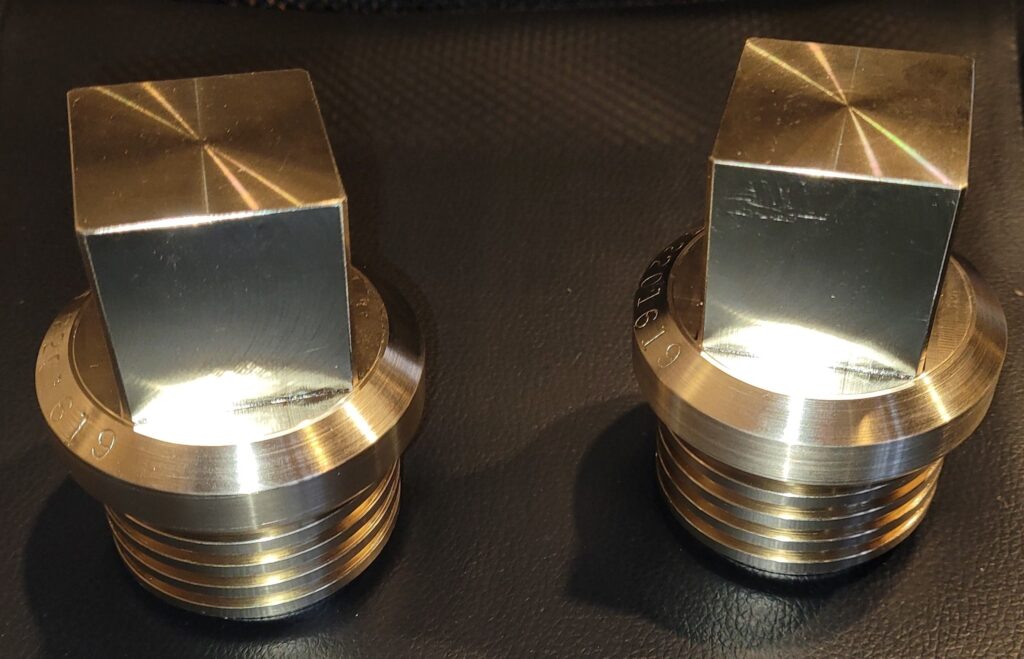
3. Washout Plug Maintenance
Washout plugs are located throughout the lower portions of the boiler and are removed to allow the cleaning and draining of scale and other solids that may gather in the boiler. Today’s FRA standards require a boiler wash to be completed after each 31-day operating period of a steam engine. Washout plugs can wear over time, and our shop crews have the ability to produce replacements on site when needed.
Keeping Your Boiler on Track
Regularly scheduled inspections and steam boiler maintenance keep you ahead of issues and allow you to create a plan before those issues become a problem. Our team has over 250 combined years of experience, so we don’t just know how to fix boilers. Our welders and fabricators are certified in various procedures and produce the highest-quality work.
Also, as a Code Shop, we’re allowed to design, build, and repair antique boilers in any jurisdiction in the country. So no matter where you’re located, our team can help with your boiler problems and create long-lasting solutions.